
Skip to latest coverage
Newsroom

Energy & process industries

Oil, gas, LNG, electricity, nuclear, hydrogen and the process infrastructure that sets industrial energy cost and availability.

← Newsroom home
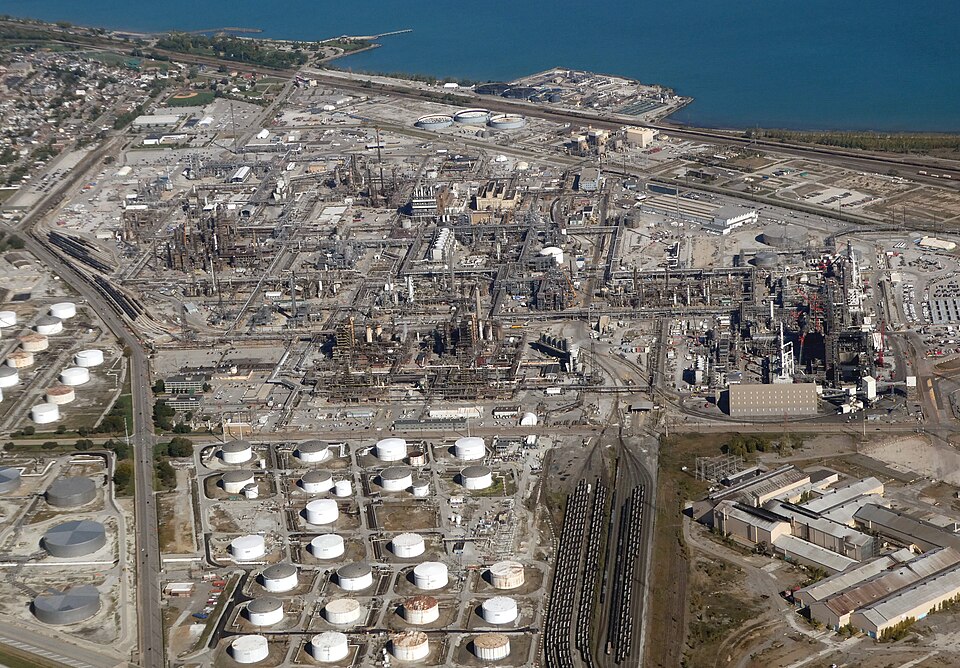
Aerial view of a large oil refinery
Whiting refinery — Pi.1415926535 / Wikimedia CommonsCC BY-SA 4.0
Oil

Oil rises after new U.S.–Iran strikes reopen the risk of shipping disruption

Crude prices jumped more than 3% after renewed strikes increased concern about Middle East production and maritime routes. The market reaction again centred on the Strait of Hormuz and the reliability of regional exports.

Technical effect

For manufacturers, the first effects appear in freight, petrochemical feedstocks, process heat and working capital before they appear in annual energy contracts. Plants should model short disruption scenarios separately from a prolonged loss of supply because the operational responses are different.

Coverage map 44 indexed topics
Latest reports

Source-linked coverage

10 items

LNG carrier at a terminal
Energy Advance — Tomarin / Wikimedia CommonsCC BY-SA 2.1 JP
LNG

IEA expects LNG supply growth to alter gas-market balances in the second half of 2026

The IEA’s third-quarter gas report reviews consumption, storage and the next wave of LNG supply. New liquefaction capacity is increasing the importance of terminal utilisation, shipping availability and regional price spreads.

Technical effect

More global LNG does not remove local constraints. Industrial users remain exposed to regasification capacity, pipeline congestion, contract indexation and competition with power generation during extreme weather.

Natural-gas compressor equipment at a wellsite
Gas compressor — KTrimble / Wikimedia CommonsCC BY-SA 2.0
Natural gas

Global gas investment is set for a ten-year high while oil investment falls

The IEA said natural-gas spending is expected to reach its highest level in a decade in 2026, while investment in oil declines. LNG, pipelines and upstream gas projects account for a larger share of energy-sector capital allocation.

Technical effect

The change supports equipment demand for compressors, turbines, cryogenic systems and corrosion-resistant materials. It also raises the risk of regional overbuild if demand, permitting or long-term contract coverage does not match project schedules.

High-voltage switchgear in an electrical substation
Switchgear — Novoklimov / Wikimedia CommonsCC BY 4.0
Power systems

EIA expects U.S. electricity use to set records in 2026 and 2027

The U.S. Energy Information Administration expects electricity consumption to reach new highs as data centres, industry and electrification add load. Peak demand and regional concentration matter as much as annual energy totals.

Technical effect

Grid connection queues, transformer availability and local transmission limits can determine factory expansion schedules. Large users should evaluate firm capacity, curtailment rules and the cost of network upgrades before treating a power purchase agreement as physical availability.

Industrial hydrogen electrolyser
Hydrogen electrolyser — The wub / Wikimedia CommonsCC BY-SA 4.0
Hydrogen

Hydrogen projects now depend on equipment utilisation and firm offtake, not announcements alone

Electrolyser manufacturing capacity has expanded faster than committed demand in several markets. Projects now depend on power price, utilisation, water treatment, compression and a customer willing to pay for the product specification.

Technical effect

Nameplate electrolyser capacity is not the same as low-cost hydrogen output. Engineering reviews should include degradation, stack replacement, rectifier efficiency, dynamic operation and the energy required to dry, compress or convert the gas.

Nuclear power plant with turbine hall and containment structure
Garigliano plant — Demaag / Wikimedia CommonsCC0
Nuclear

IAEA and World Bank agree to cooperate on nuclear-energy development

The IAEA and World Bank announced cooperation intended to improve access to technical expertise and financing for nuclear programmes. The agreement addresses the institutional and capital barriers that sit alongside reactor technology.

Technical effect

For the supply chain, credible programmes require long-lead forgings, qualified weld procedures, nuclear-grade instrumentation and durable regulatory capability. Financing matters, but schedule risk often comes from component qualification and project governance.

More reports

Additional coverage

5 additional reports

Oil market

IEA trims the oil-demand picture as supply and geopolitical risk pull in opposite directions

The July Oil Market Report assesses demand growth, refinery runs, inventories and producer supply against renewed geopolitical disruption. Prices can rise on route risk even when medium-term demand growth is weak.

Technical effect

Industrial budgeting should not treat spot oil prices as a single demand indicator. Refining margins, product inventories and regional freight can create different cost paths for diesel, naphtha, polymers and lubricants.

Power systems

Heat and industrial activity push China’s electricity demand to a record

China recorded a new high in power demand as hot weather coincided with strong industrial loads. The event tests generation availability, coal and gas logistics, hydro conditions and transmission between regions.

Technical effect

Energy-intensive producers face both price and reliability exposure during coincident peaks. Demand response, thermal storage and flexible production schedules can be more valuable than annual average electricity-price comparisons.

ReutersSource ↗
Electrification

EU drafts an electrification plan to reduce oil and gas exposure

A draft European Union plan seeks faster electrification in transport, buildings and industry after renewed fuel-supply disruption. The policy direction increases the importance of grid build-out and equipment availability.

Technical effect

Replacing fuel with electricity changes plant infrastructure rather than only the energy contract. High-temperature processes may require new furnaces, transformers, protection systems and operating practices, while network reinforcement can set the critical path.

ReutersSource ↗
LNG

EIA expects U.S. LNG exports to grow by about 30% through 2027

EIA projects additional liquefaction capacity will raise U.S. LNG exports substantially by 2027. The increase links domestic gas production more closely to global prices and terminal operating rates.

Technical effect

Export growth supports demand for cryogenic valves, heat exchangers, compressors and specialised steels. It can also tighten regional gas balances near terminals when pipeline expansion lags liquefaction capacity.

Strategic reserves

Strategic-reserve purchases are expected to support crude demand through 2028

Reuters reported that government stock-building could provide a durable source of crude demand even as commercial consumption changes. Reserve replenishment affects physical differentials and the timing of available barrels.

Technical effect

The effect is route- and grade-specific because storage caverns and refineries cannot accept every crude interchangeably. Buyers should watch the grades purchased, delivery locations and whether reserve demand competes with regional refiners.

ReutersSource ↗