Skip to latest coverage
Newsroom

Additive manufacturing & materials computation

Metal and polymer additive processes, qualification, in-situ measurement, materials data, autonomous laboratories and computational materials development.

← Newsroom home
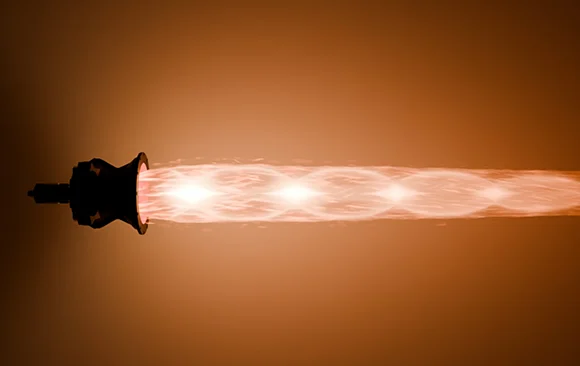
Rocket-engine test with a bright exhaust plume
Venus Aerospace / Metal AMCompany handout; verify republication rights
Propulsion

Venus Aerospace raises $91 million for a high-thrust engine built around additive production

Venus Aerospace announced $91 million in funding for propulsion development that uses additively manufactured hardware. The programme couples engine design with a production route capable of internal passages and consolidated assemblies.

Technical effect

The decisive issue is repeatability across builds and machines, not whether a demonstrator can fire. Qualification must connect powder or wire condition, build parameters, heat treatment, inspection and proof testing to the failure modes of hot-section hardware.

Coverage map 47 indexed topics
Latest reports

Source-linked coverage

10 items

Row of industrial metal additive manufacturing systems
Beehive Industries / TCT MagazineCompany handout; verify republication rights
Production capacity

Beehive Industries orders 30 EOS M4 systems in a $50 million metal-AM expansion

Beehive Industries announced a large deployment of four-laser EOS M4 systems for propulsion and aerospace production. The order concentrates substantial powder-bed capacity under one operating organisation.

Technical effect

Scale exposes issues that a single-machine cell can hide: parameter governance, powder tracking, common maintenance practice, fleet calibration and statistical equivalence. The useful output metric is accepted hardware per month, not installed machines.

Engineer holding a metal additively manufactured component
Stärke / Metal AMCompany handout; verify republication rights
Machine investment

Stärke adds three Renishaw AM400 systems for serial metal production

Stärke expanded its installed base with three additional Renishaw AM400 machines. The investment is aimed at increasing capacity while retaining a common machine platform and process environment.

Technical effect

Adding identical equipment can simplify transfer, but nominally equal machines still require calibration and equivalence evidence. Fleet expansion should include witness coupons, common maintenance limits and rules for moving a qualified job between systems.

Aircraft associated with an additive manufacturing programme
Industry handout / TCT MagazineSource image; verify republication rights
Aerospace qualification

Norsk Titanium gains Nadcap accreditation for additive manufacturing

Norsk Titanium received Nadcap accreditation for its additive manufacturing operations. The approval strengthens the company’s route for supplying aerospace components produced by rapid-plasma deposition.

Technical effect

Accreditation confirms an audited quality system and special-process controls; it does not qualify every geometry or material state. Customers still need part-specific substantiation, machining allowances, inspection plans and property data tied to the deposition route.

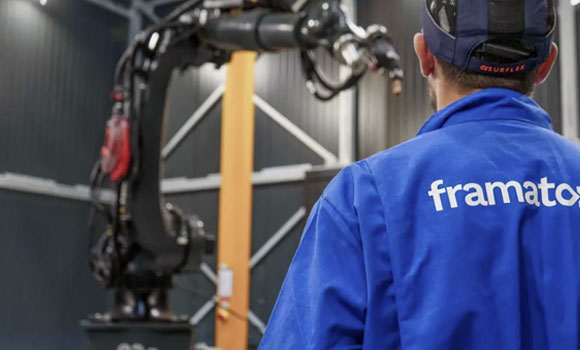
Wire-fed robotic additive manufacturing cell
Framatome / Metal AMCompany handout; verify republication rights
Wire-arc additive

Framatome extends wire-based additive work for nuclear components

Framatome has continued developing wire-fed additive routes for large metallic components and repair applications. The process offers high deposition rate but leaves machining, anisotropy and thermal management as central engineering tasks.

Technical effect

Nuclear use requires material pedigree, procedure qualification and inspection coverage across thick deposits. The economic case is strongest where forgings have long lead times or where near-net deposition removes a major supply bottleneck.

Large-format additive manufacturing equipment
Industry handout / TCT MagazineSource image; verify republication rights
Large-format AM

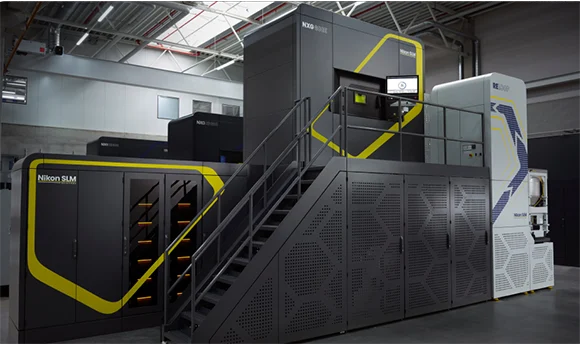
Large-format systems target tooling and structures where deposition rate matters more than fine resolution

Industrial suppliers are expanding large-format additive systems for moulds, tooling, patterns and structural preforms. These applications tolerate subsequent machining and exploit rapid material placement over complex fine detail.

Technical effect

The correct comparison is against fabricated or cast tooling, including design labour, machining, thermal stability and repair. A high deposition rate can be offset by porosity, distortion or excessive finishing if the process window is not controlled.

More reports

Additional coverage

5 additional reports

Certification

ASTM publishes guidance for defence additive-manufacturing certification

ASTM released guidance intended to organise certification evidence for defence applications. The framework addresses the chain from material and machine controls to process qualification and part acceptance.

Technical effect

A guide is valuable only when programmes convert it into controlled data packages and responsibility boundaries. Defence users need to know which changes trigger requalification, how machine equivalence is proven and how digital build records are retained.

Metal AMSource ↗
Materials allowables

Dyndrite leads an America Makes project on material allowables for additive production

The AIM-4AM project will apply data and computation to the development of additive-manufacturing material allowables. The work addresses the long and expensive route from build data to design values accepted by engineering authorities.

Technical effect

Allowables require controlled populations, not selected high-performing coupons. The project must account for machine-to-machine variation, orientation, heat treatment, defect acceptance and the statistical basis used to define design limits.

TCT MagazineSource ↗
Industry organisation

CECIMO launches AM-Europe as a dedicated additive-manufacturing organisation

CECIMO created AM-Europe to represent additive suppliers and users in standards, policy, skills and industrial adoption. The body provides a European forum distinct from general machine-tool representation.

Technical effect

A sector organisation can reduce duplicated work on standards and regulatory interpretation. Its credibility will depend on including users, materials suppliers and certification bodies rather than representing equipment sales alone.

Metal AMSource ↗
In-situ metrology

NIST roadmap focuses on measurements that can interrupt a defective metal build early

NIST convened work on in-situ metrology for metal-alloy additive manufacturing. The objective is to distinguish measurements that correlate with material condition from large volumes of machine data that are difficult to interpret.

Technical effect

Monitoring becomes useful when it supports a defined decision: continue, pause, reject or investigate. Qualification needs traceable sensors, stable calibration and evidence connecting the measured feature to a defect or property outcome.

Materials data

The Materials Project expands the data foundation used in computational materials research

Berkeley Lab described how the Materials Project is supporting wider use of computation and machine learning in materials research. Its value comes from structured, reusable calculations and open access rather than a single prediction model.

Technical effect

Database scale does not remove uncertainty in phase stability, defects, kinetics or manufacturability. Engineering use requires provenance, uncertainty estimates and experimental checks targeted at the decisions a model is expected to support.

Berkeley LabSource ↗