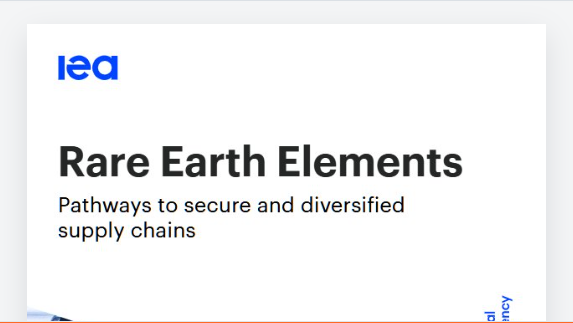
The central issue in critical minerals is no longer whether demand will grow. It is who controls conversion, who can interrupt trade and which countries remain locked into extraction while value accumulates elsewhere. UNCTAD’s June 2026 update is useful because it treats minerals as a trade architecture, not simply as a mining forecast.
The report’s most important message is political: supply security is being rebuilt through export rules, bilateral partnerships and domestic-processing policies. These measures may increase resilience for some economies while transferring volatility and bargaining costs to others.
What the official report establishes
UNCTAD projects lithium demand to rise by 353 percent between 2024 and 2040 and graphite demand by 131 percent. It also records extreme production concentration: in 2025 the Democratic Republic of the Congo supplied 74 percent of mined cobalt, Indonesia 67 percent of mined nickel and China 69 percent of mined rare earths. Concentration becomes sharper in refining, where technical know-how, capital intensity, chemical processing and customer qualification create barriers that geology alone cannot overcome.
The update identifies nearly one hundred new export measures since 2020 and reviews 73 critical-mineral partnership agreements, 58 of them signed since 2022. The pattern matters. Resource-rich developing countries are increasingly using licensing, taxes and bans to push processing inward, while consuming economies are building preferred networks of supply. Partnership language often promises resilience and development, but upstream extraction still receives more attention than technology transfer, skills and bankable midstream capacity.
The strategic meaning
For manufacturers, the immediate risk is not a universal physical shortage. It is the possibility that a material remains available globally but becomes inaccessible to a particular firm because of origin rules, sanctions exposure, contract concentration, shipping disruption or incompatible traceability requirements. Procurement therefore has to move beyond price and annual volume into jurisdiction, conversion route, substitution options and recovery from scrap.
For producing states, export restrictions can create negotiating leverage, but they are not a substitute for power, water, transport, laboratories, environmental permitting and patient industrial finance. A ban without a credible processing ecosystem can strand output or reward a small number of intermediaries. The stronger strategy is sequenced: transparent resource data, shared infrastructure, enforceable local-processing obligations, skills, and market access for the resulting products.
Where the official analysis is thin
The publication is intentionally concise and does not fully test the economics of every proposed diversification project. It also gives limited attention to the environmental burden of duplicated refining capacity and to the possibility that aggressive security policy creates overcapacity in politically favoured locations. Readers should treat the partnership count as a map of intent, not proof that alternative supply chains will reach commercial scale.
Implications for governments, producers and investors
- Map exposure at the level of mine, converter, refiner and precursor—not only country of purchase.
- Write value-addition agreements around infrastructure, technical capability and long-term offtake rather than headline processing targets.
- Build recycling and substitution into security policy before a disruption, when qualification can still be carried out deliberately.
- Publish clearer data on trade measures and partnership performance so smaller economies can negotiate from evidence rather than aspiration.
What to watch next
- Whether export controls spread from ores and concentrates into refined intermediates and manufacturing inputs.
- Which announced partnerships reach financing, construction and qualified production.
- Whether developing-country agreements begin to include stronger provisions on technology, skills and downstream market access.
This article is an independent interpretation of the official publication. It preserves the report’s central evidence, separates institutional findings from our judgement, and points readers to the original document for the full methodology and data tables.