



Residual Stress: Hidden Loads Inside Components
Understand how processing locks stress into materials and how it affects distortion, fatigue and fracture.
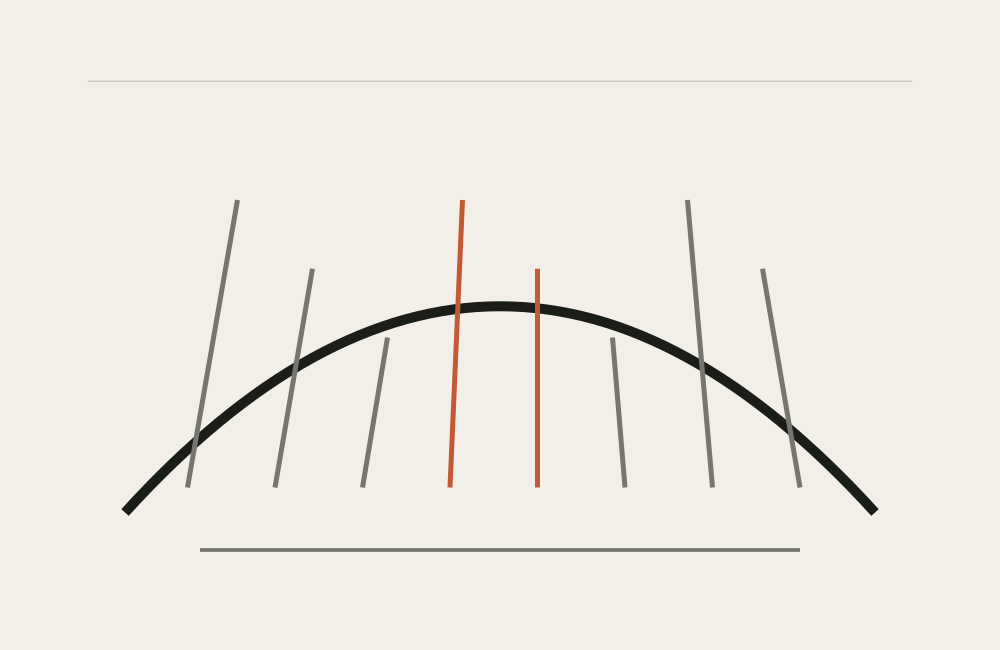
Self-equilibrating stress
Residual stresses remain after external loads are removed. Tensile and compressive regions balance over the component.
How they form
Welding, quenching, machining, forming, grinding and additive manufacturing create non-uniform plastic strain or thermal contraction.
Why they matter
Tensile residual stress can accelerate fatigue and cracking; compressive surface stress can be beneficial.
Measurement and control
X-ray diffraction, hole drilling, contour methods and neutron diffraction probe different depths and scales.
Engineering takeaway
Include residual stress in failure analysis and dimensional control whenever processing is strongly non-uniform.